Carbon Medium-Wave Infrared Lamps: The Real Deal on Specs, Build, and Use
We build carbon medium-wave infrared lamps for one reason: industrial heating that needs to be fast, controllable, and focused. Not a space heater. Not a “warm the room” kind of thing. These are precision tools—built to slot right into a production line and deliver heat exactly where you want it, when you want it.
Power, voltage, and size: what it actually means on the floor
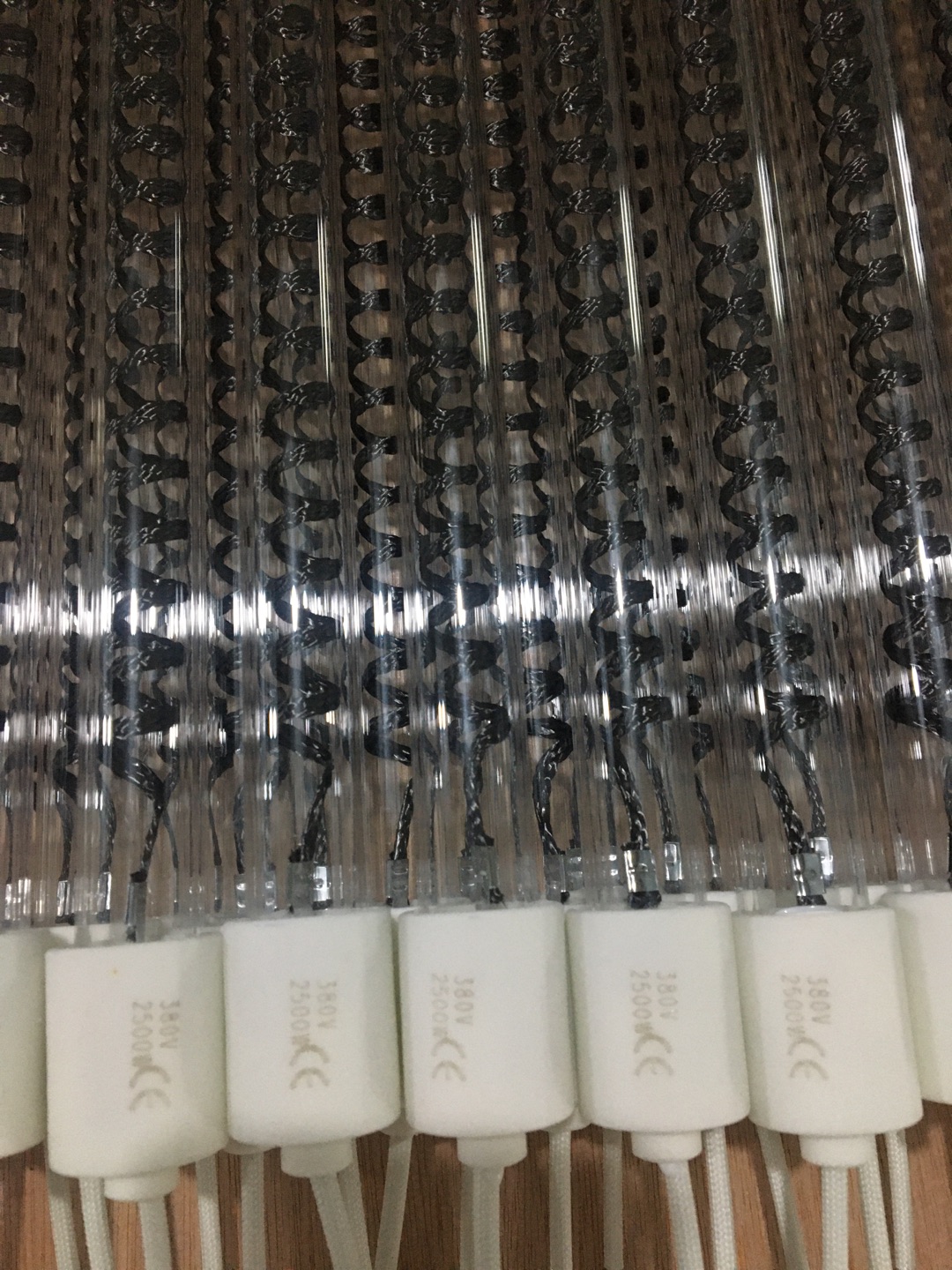
These lamps put out medium-wave infrared, which is great when you need surfaces to soak up heat quickly and heat evenly. We use a 400V high-voltage design, and here’s the practical payoff: for the same wattage, you get lower current. That means smaller wiring and simpler routing inside tight machines. And the size? A 300mm tube, rated at 2500W. So you get serious heat density in a small footprint—perfect when you need to concentrate energy in one tight spot. But there’s a trade-off. Packing that much wattage into a short tube means things get hot—fast. Your machine has to be built to handle that heat, manage reflection, and keep the lamp’s immediate area within safe limits.
What’s inside—and why it matters in day-to-day use
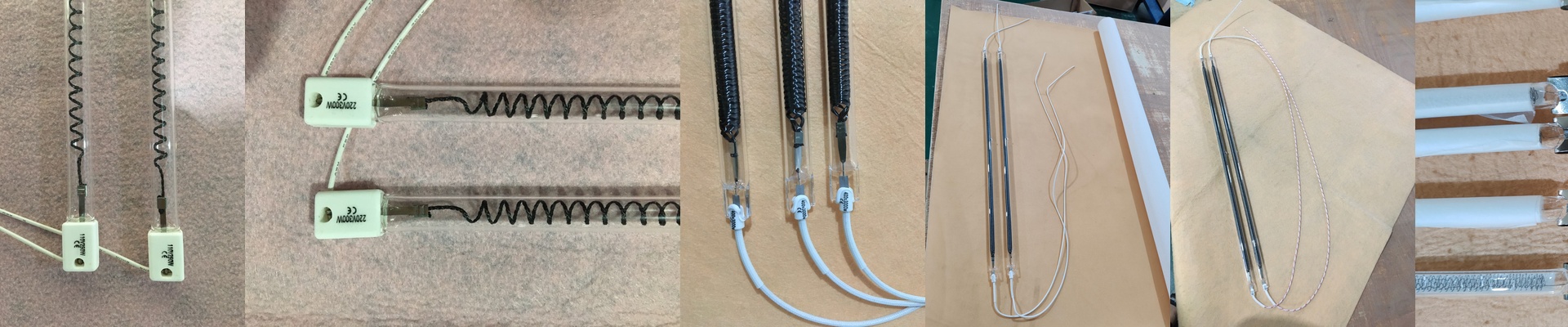
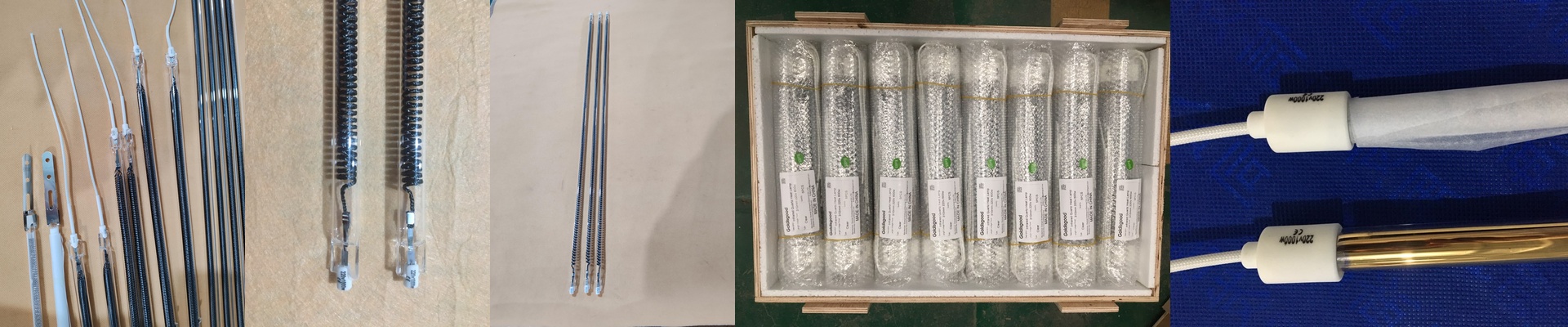
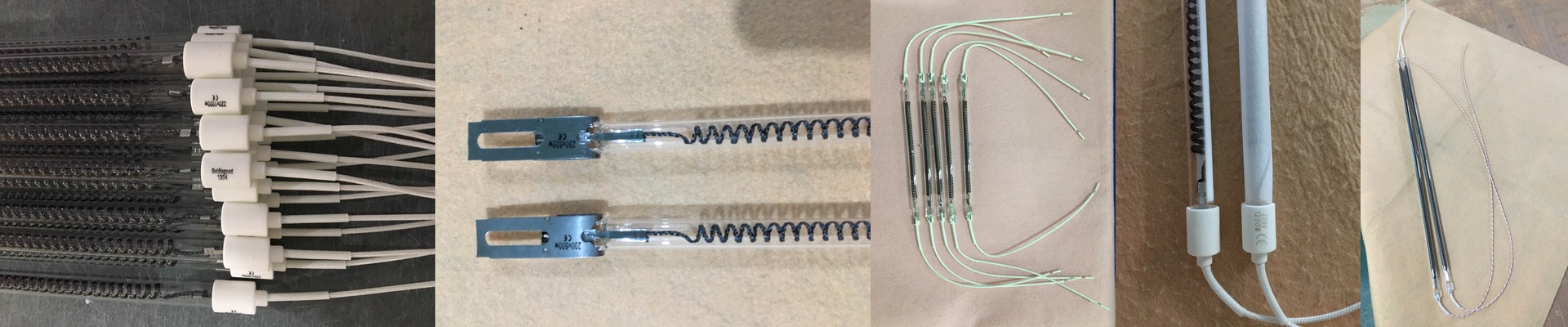
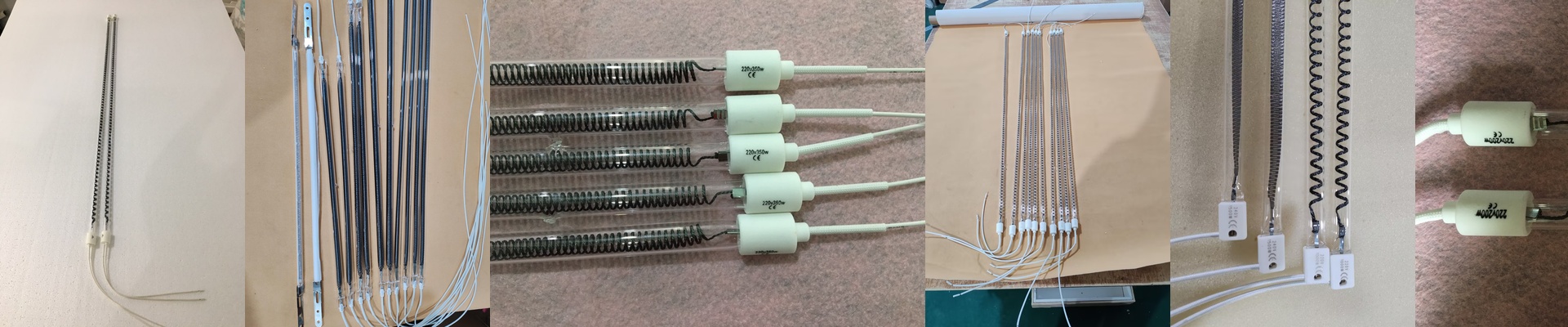
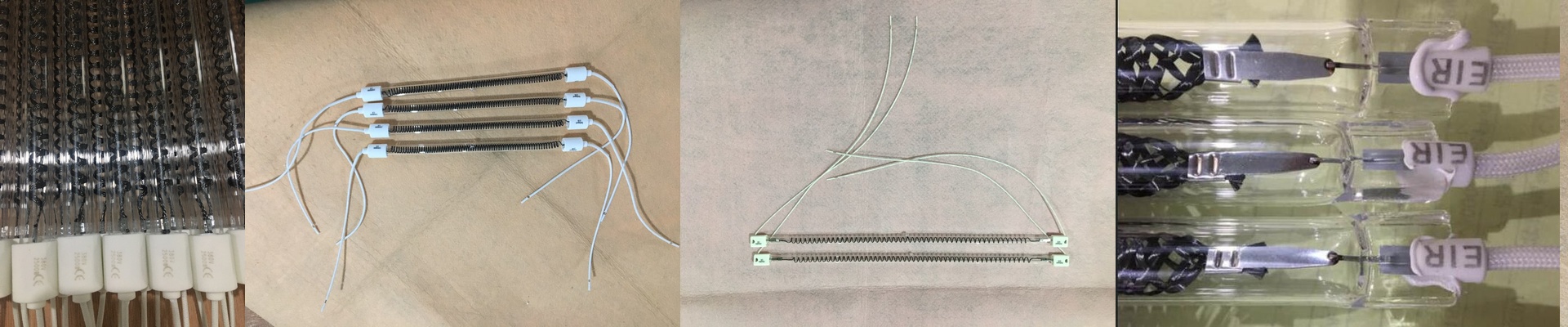
Inside, you’ve got a carbon filament. The halogen cycle inside the quartz envelope helps keep output stable over time, so you don’t get that steady dimming from blackening. The quartz tube doesn’t just hold everything together—it transmits IR efficiently and handles rapid on/off cycles. So when you flip the power on, it heats fast. When you turn it off, it cools fast. That responsiveness is a big part of what makes these lamps feel like proper industrial equipment. We also add a reflective coating on the back half of the tube. It pushes more energy forward, so you get better directional efficiency and less wasted heat going the wrong way. And the R7s connector? It’s a simple two-end linear contact that handles the current load and makes the lamp a straight swap into standard fixtures. No drama.
Where these lamps shine—and what to watch for
You’ll see these lamps show up a lot in PET blowing setups, plastic welding, coating curing, and thermoforming. Medium-wave output gets into surface films fast and heats thin materials evenly, which helps reduce hot spots and keeps cycle times moving. The feel of it on the line is the point: fast start-up, tight control, and a compact shape that fits into tight heating zones. But plan for cooling and mounting clearance. If the lamp runs hot, the parts around it feel it. So design your airflow, shielding, and mounting with the wattage and duty cycle in mind. Get that right, and the lamp does its job without turning the whole machine into a heat problem.